
Impact Story | Beyond Fighting Fires: The Public Health Story Behind Central Oregon’s Prescribed Burns
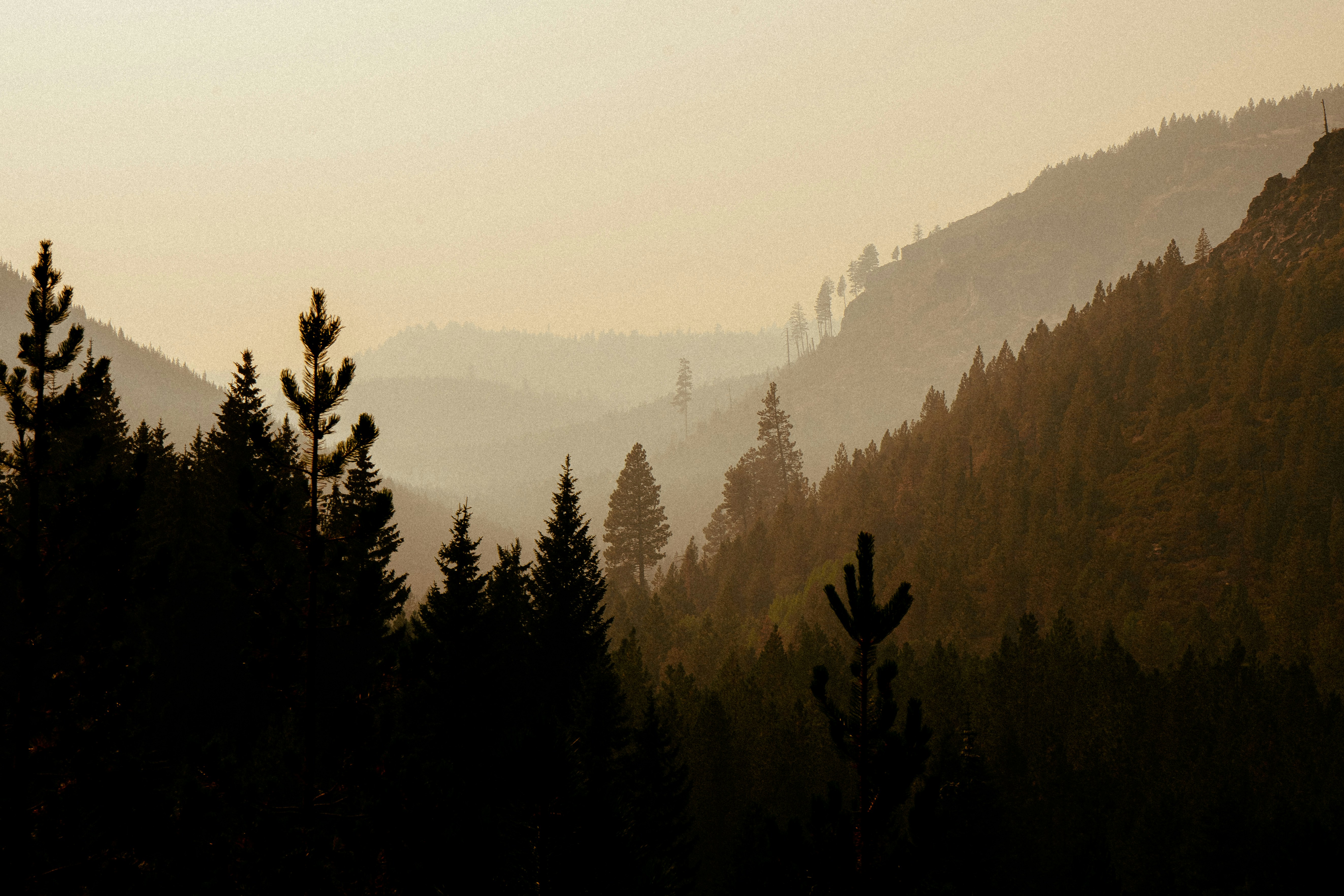
Oregon’s wildfire seasons keep breaking records. In 2024, nearly 1.9 million acres burned statewide, the worst season on record, and suppression costs hit $317 million.
Fighting fires after they start is only part of the picture. A growing body of evidence shows that preventing catastrophic wildfires through forest thinning and prescribed burning is just as critical. In Central Oregon, public health played a pivotal role in making that prevention work possible.
The Problem: Forests Built to Burn, But Not Allowed To
For millennia, Ponderosa pine forests around Bend, Sisters, and Sunriver burned naturally every 5 to 20 years with low-intensity fire, actively stewarded by Indigenous peoples. Research on traditional fire use by the Confederated Tribes of Warm Springs, whose homelands span the eastside Cascades of Central Oregon, documents how the Ichishikin (Sahaptin), Kitsht Wasco, and Numu (Northern Paiute) peoples used fire to maintain forest conditions and culturally valued resources for generations. Beginning in the early 1900s, state and federal policy criminalized that practice, and decades of fire suppression and logging left these forests far outside their historic conditions, packed with small trees and brush, and primed for high-severity wildfire that didn’t used to occur in these landscapes.
The obvious fix is to treat these forests with prescribed fire, the same kind of fire Indigenous peoples used for generations. But doing that today runs into a different obstacle: air quality law.
The Catch: Smoke Rules Make Prevention Hard
The Clean Air Act and Oregon’s even stricter implementation of it through the state’s Smoke Management Plan limit the amount of smoke prescribed burns can produce, especially near vulnerable populations and towns designated as Smoke Sensitive Receptor Areas. Wildfires, meanwhile, are treated as unavoidable events with no such limits. Land managers and researchers have identified air quality regulation as a major barrier to prescribed burning in Oregon, and that mismatch meant land managers around Bend were only able to burn 230 acres a year, far short of what the landscape needed.
The Bridge: A Public Health Modernization Position
Breaking that bottleneck took a translator, someone who understood both the regulations and the health stakes well enough to bridge them. Public health modernization funding paid for that position at Deschutes County, held by Sarah Worthington, a Regional Climate and Health Coordinator focused on climate-related public health impacts for Deschutes, Crook, and Jefferson Counties. The need was real: eastern Oregon has seen a 24.2-fold increase in the number of days per year with unhealthy air quality due to wildfire smoke, the largest increase anywhere in the state. Federal and state agencies had been working across varying regulations with little success, stuck without a shared path forward. The sticking point was simple to state and hard to solve: how much smoke is too much, and who decides?
“Sarah served as the translator between the air quality regulatory agencies, the public health agencies, and the forest managers. That’s what made it possible for us to navigate smoke-management constraints and dramatically increase the amount of community-saving prescribed fire we could get done. We were the first project of its kind that the EPA ran in the United States, and they ran it in other places the next year. I don’t think they had nearly the success that we had, because they didn’t have a Sarah Worthington.” — Commissioner Phil Chang, Deschutes County (from CLHO interview, June 2026)
The EPA project that Commissioner Chang referenced was the West Bend Prescribed Fire Pilot, which brought together the EPA, Forest Service, and Oregon and Washington state agencies, who signed a Joint Statement of Intent to Cooperate on Prescribed Fire and Smoke Management in February 2024, naming West Bend, Oregon, as one of two initial pilot communities, alongside a site in North Central Washington. Multiple agencies met weekly for months, hammering out a shared approach. The results were dramatic. Average annual prescribed burning around West Bend jumped from 230 acres before the pilot to 1,846 acres during the pilot year, an eightfold increase. That kind of increase only happened because of a deliberate choice about how to frame the trade-off between smoke now and fire later.
Not “Sacrificing” Public Health, Protecting It
That framing wasn’t about asking public health to accept worse outcomes for the sake of fire prevention. A little more managed, predictable smoke now prevents far worse, unmanaged smoke when wildfire eventually reaches homes and buildings.
“We didn’t go into this pilot saying, ‘Just sacrifice public health a little bit so we can get this done.’ We went in saying, ‘If you let us do a bit more prescribed burning and we communicate the heck out of it and prepare people, we don’t expect more health impacts—we expect fewer, because we’re preventing catastrophic wildfires.’” — Commissioner Phil Chang, Deschutes County (from CLHO interview, June 2026)
That reframing took specific, sustained work.
What Public Health Actually Did
Public health’s role went well beyond regulatory translation. Deschutes County’s public health emergency preparedness team, including Worthington, worked directly with residents and partner organizations during both the West Bend pilot’s prescribed burns and, more broadly, wildfire smoke events. Worthington herself examined hospital intake data during past smoke events to evaluate health impacts and was part of a larger effort to expand the local emergency alert system to a little over 74,000 subscribers.
“With this new partnership, we are able to provide information that we really hadn’t provided before. That included working with the Council on Aging to reach our older adults, working with the school district and daycare centers, and with healthcare providers so they could pass that information along to patients with underlying health conditions.”
— Sarah Worthington, Regional Climate and Health Coordinator, Deschutes County Health Services (from “Deschutes County Prescribed Burn Outreach”, an Oregon Health Authority public health modernization video)
The team also worked with community partners to increase the number of cleaner-air sites for anyone needing respite from smoke, including outreach through Meals on Wheels and local senior centers, and provided residents with practical guidance, such as closing windows at night when smoke tends to sink into the air.
The Bigger Picture
Stepping back, the results of this work speak for themselves. Commissioner Chang is direct about why the West Bend pilot succeeded where others didn’t: it had a dedicated public health partner, funded through public health modernization, embedded from the start. Other communities that tried similar pilots lacked that capacity and saw less success.
“I think our community is more prepared because of these partnerships. We now have trusted messengers to help our most vulnerable be prepared for smoke impacts that, unfortunately, we’re going to experience every year.”
— Heather Kaisner, Public Health Director, Deschutes County Health Services (from “Deschutes County Prescribed Burn Outreach”, an Oregon Health Authority public health modernization video)
This story illustrates something CLHO’s recent issue brief on wildfire emergency preparedness also makes clear: public health’s role in wildfire isn’t limited to emergency shelters and smoke alerts during active fire season. It extends upstream, into the prevention work that reduces how severe future fires will be in the first place.
“We really need more prescribed fire, and our public health division was critical in helping us get that done in this region.” — Commissioner Phil Chang, Deschutes County (from CLHO interview, June 2026)
As Oregon continues to invest in both wildfire suppression and prevention, sustaining and expanding that dedicated public health capacity deserves a place in the conversation.
CLHO thanks Commissioner Phil Chang for taking the time to share this story with us, and Sarah Worthington, Heather Kaisner, and the Deschutes County public health team for the dedicated work reflected throughout. Their collective commitment to building healthier, more fire-resilient communities in Central Oregon offers a model worth learning from as Oregon continues to invest in wildfire prevention statewide.
For more information:
Read CLHO’s issue brief on wildfires and public health: Beyond Fighting Fires: Public Health’s Essential Role in Wildfire Emergency Preparedness
Contact: Sarah Lochner, Executive Director | Oregon Coalition of Local Health Officials | sarah@oregonclho.org
Sources and Data
Forest History and Indigenous Stewardship
Smoke Regulation
The West Bend Pilot
Wildfire Statistics
Direct Interviews and Media
Oregon Health Authority: “Deschutes County Prescribed Burn Outreach” (public health modernization video, July 23, 2025)